

Application Insights
EMI Shielding Enclosures and Thermal Management
Practical notes on using cellular aluminium in shielded enclosures and heat-transfer assemblies: electrical continuity, joints, p…
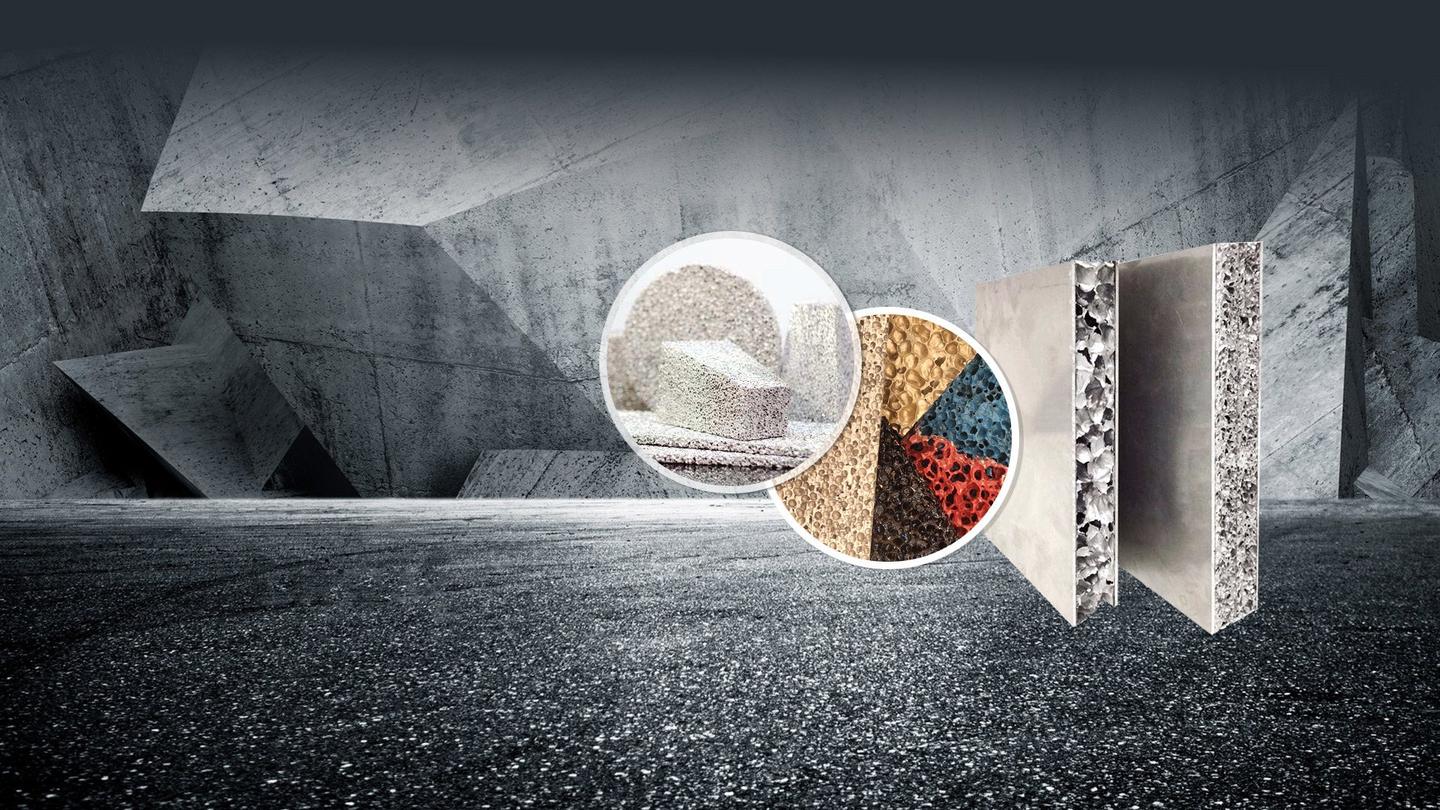
Fumeite manufactures closed-cell aluminum foam sheets, sandwich panels, highway sound barriers and energy-absorbing structural parts — with uniform cell structure, controlled density and export-ready documentation for global projects.
Around 1/10 the density of solid aluminium, 1/30 of steel — ideal for lightweight sandwich structures.
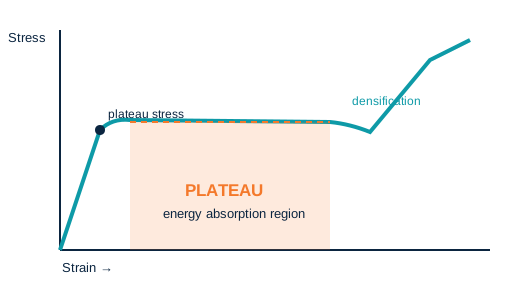
A long, stable compressive plateau absorbs impact energy layer by layer instead of transferring it.
Perforated and open-cell surfaces deliver durable sound absorption for highway and rail noise barriers.
A non-combustible metal: no toxic smoke, no melting droplets, stable at elevated temperature.
Conductive cell walls provide electromagnetic shielding alongside acoustic performance.
Aluminium matrix can be remelted; no fibres, no dust, no harmful substances in service.
From raw closed-cell foam blocks to finished sandwich panels, acoustic barriers and precision structural parts — produced in our own plant in Hebei, China.

Closed-cell aluminum foam sheet is the base form of the material: a lightweight cellular metal panel with controll…
View series →
A sandwich panel combining a closed-cell aluminum foam core with dense aluminium or other face sheets. The core ca…
View series →
Near-net-shape and machined aluminum foam components designed around a specific energy absorption or protection re…
View series →
Non-fibrous acoustic barrier panels for highways, bridges, urban rail and industrial sites. Perforated or surface-…
View series →
Architectural panels that use the cellular surface as a visual feature: interior walls, ceilings, screens, door he…
View series →A light-transmitting closed-cell foam panel with a controlled open surface, used for decorative screens,…
View details →Foam-core composite sheet with dense face sheets for stiff, lightweight, non-combustible panels.
View details →
Machined foam components designed to manage impact energy in protective body structures.
View details →Perforated aluminum foam acoustic cassette for motorway noise barriers, without fibrous absorber media.
View details →Cellular aluminium art panels for interiors, combining texture, low weight and fire safety.
View details →
Stamped and perforated foam sheet with a regular opening pattern for decorative and acoustic-lighting ap…
View details →Project-specific AFS sandwich panels for cladding, acoustic barriers and vehicle structures.
View details →
Specialised protective foam structures for sensitive equipment requiring controlled impact and shock iso…
View details →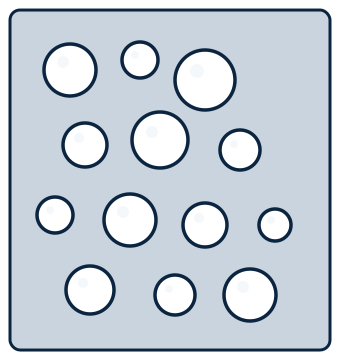
Aluminum foam is a cellular metal: a rigid aluminium skeleton surrounding thousands of gas-filled cells. It keeps the fire safety, conductivity and recyclability of metal while behaving like an ultra-light structural core.
When compressed, the cell walls collapse progressively over a long plateau stress region — which is why the material is specified for crash absorbers, blast protection and protective packaging. The same pore network, when opened or perforated, dissipates sound energy, making it a durable, non-fibrous absorber for outdoor noise barriers.
A practical, balanced view for overseas buyers evaluating Chinese aluminum foam suppliers.
China has the world’s largest primary and recycled aluminium base, plus local foaming agents, alloy additives and foaming equipment — shortening the chain from ingot to finished foam panel.
Large-format closed-cell blocks, sheets and sandwich panels are produced on industrial lines, which helps keep cost per square metre competitive for infrastructure and transport projects.
Density, cell size, thickness, perforation pattern, colour and composite layups are typically adjustable without long tooling lead times — useful for architects and OEM engineers.
Highway sound barriers, rail transit, building cladding and protective structures in the domestic market provide a broad reference base before export.
Our partnership with Tsinghua University’s materials team supports work on small-cell (1–2 mm) foam, pore uniformity control and process repeatability.
High-end consistency, long-term corrosion and fatigue datasets, and third-party certification still need project-specific verification — we provide test reports and samples for that purpose.
One material, many functions — specified wherever weight, impact safety, acoustics and fire performance must coexist.

Interior walls, ceilings, facades, screens and exhibition displays using the cellular surface…
Learn more →
Non-fibrous acoustic barrier panels for motorways, bridges, urban rail and tunnels.
Learn more →
Sandwich floors, wall panels and crash absorbers where mass reduction and impact safety must c…
Learn more →
Impact and blast mitigation, lander foot pads, protective bodies and specialised shielding.
Learn more →
Crash boxes, buffer structures, anti-collision parts and protective packaging.
Learn more →Conductive cellular panels for electromagnetic shielding, heat spreading and industrial flow-t…
Learn more →Our R&D and production base in Raoyang County, Hengshui, Hebei covers about 30,000 m². The site integrates high-performance foaming agent preparation, foam casting, composite lamination, surface treatment, machining and inspection.
A scientific research workstation for aluminum foam was established in the industrial park together with Tsinghua University, focusing on pore-size uniformity, porosity control, surface quality and yield stability. Small-cell foam (1–2 mm) with a more uniform pore distribution is one of the developments we can discuss for energy-absorbing applications.


Selected highway, rail and architectural installations. Photos are from our own project archive.

Aluminum foam acoustic barrier panels installed along an expressway section to reduce tra…
Case details →
Landscape-integrated noise barrier combining acoustic performance with a visually screene…
Case details →
Blue-and-white aluminum foam noise barrier installed along an expressway alignment.
Case details →
Lightweight acoustic barrier panels for a bridge section where dead load and wind load ar…
Case details →Technical notes, industry background, research reading notes and buying guidance — updated for engineers, specifiers and distributors.
Practical notes on using cellular aluminium in shielded enclosures and heat-transfer assemblies: electrical continuity, joints, p…

How mounting, cavity depth and surface opening change measured absorption, and how to write an acoustic specification that two su…

How opened aluminum foam panels contribute to room acoustics, what the air cavity and mounting do, and why fire safety and surfac…
Why pore-size distribution and density tolerance matter more than an average cell-size figure, and what to request from a supplie…

A methodology note for anyone quoting aluminum foam market figures: the six definition differences that make published estimates…

How to translate an impact energy and allowable force into a foam density, crush stroke and verification plan for crash and blast…
Can’t find your answer? Send our engineers a drawing or a performance target and we will respond with a proposal.
Full FAQ


Send us your drawing, density target or performance requirement. Our engineers will get back with a proposal.
Product news, technical notes and exhibition updates. Links and QR codes below are managed in the admin panel.